
For years, businesses treated LinkedIn like an online résumé bank. Post a job. Update a title. Share a company milestone and move on.
In 2026, that mindset is costing brands visibility, authority, and revenue.
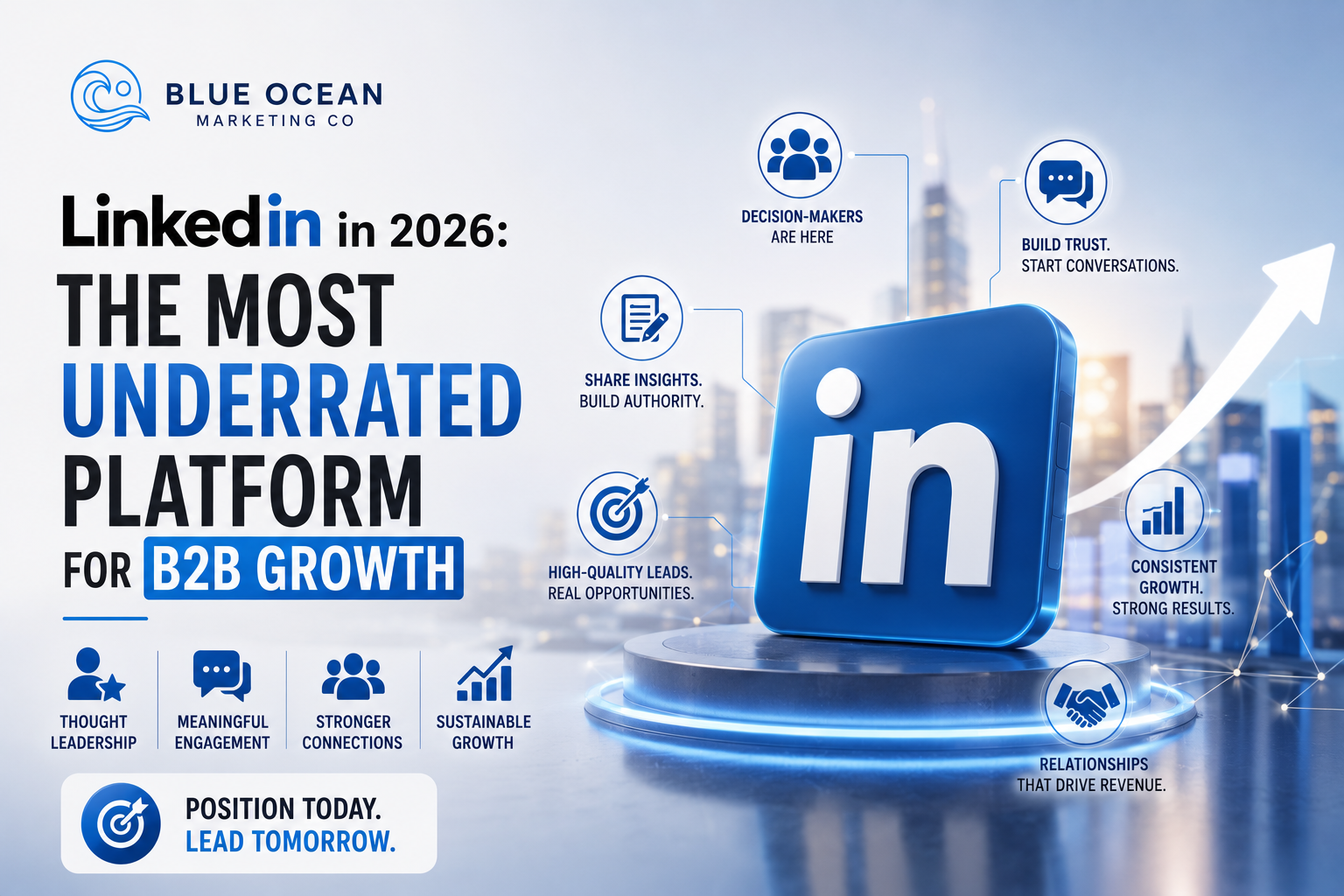
While everyone competes for shrinking attention spans on entertainment-driven platforms, LinkedIn has quietly become one of the most powerful spaces for B2B growth, high-quality leads, and thought leadership positioning. And it’s still wildly underutilized.
Let’s talk about why.
1.Decision-Makers Are Actually Paying Attention
Unlike platforms built primarily for distraction, LinkedIn users log in with professional intent. They’re thinking about:
- Growth
- Hiring
- Strategy
- Partnerships
- Revenue
That context matters.
When your content shows up in a feed where people are already thinking about business solutions, you’re not interrupting their day. You’re entering an existing conversation.
In 2026, attention is fragmented everywhere else. On LinkedIn, it’s focused.
2. Organic Reach Is Still Viable
Organic reach has tightened across most platforms, but LinkedIn still rewards:
- Thoughtful commentary
- Industry insights
- Contrarian perspectives
- Native long-form posts
- Conversation-driven content
The algorithm continues to prioritize dwell time and meaningful engagement over surface-level interactions. That means a strong, insight-driven post can outperform a polished graphic.
The brands winning on LinkedIn right now aren’t posting corporate brochures. They’re sharing perspectives.
3. Personal Brands Outperform Company Pages
One of the biggest shifts in 2026 is this: people trust people more than logos.
Founders, executives, and leadership teams who show up consistently are generating more traction than company pages alone. When leadership shares lessons learned, strategic thinking, and real experiences, it builds credibility faster than any ad campaign.
Company pages matter.
But executive presence converts.
The smartest B2B brands are aligning personal and company messaging to create authority from multiple angles.
4. Long-Form Content Is Making a Comeback
Short-form video dominates many platforms, but LinkedIn rewards depth.
Long-form posts that:
- Break down strategy
- Share frameworks
- Offer real analysis
- Tell detailed stories
are driving higher engagement and stronger inbound conversations.
Why? Because decision-makers want clarity, not just inspiration.
If you can teach, you can lead.
5. LinkedIn Is a Lead Generation Engine (When Used Intentionally)
The businesses seeing real ROI are not “posting and hoping.” They are:
- Creating educational authority content
- Engaging in strategic commenting
- Nurturing conversations in DMs
- Connecting with intention
- Aligning content with services
LinkedIn in 2026 is less about viral moments and more about relational proximity. A thoughtful comment can open a contract conversation. A valuable post can spark a discovery call.
It’s networking at scale, but human.
6. Trust Is the New Currency
Audiences are more skeptical than ever. AI-generated content is everywhere. Automation is rampant.
LinkedIn gives brands an opportunity to slow down and demonstrate expertise through:
- Clarity
- Consistency
- Insight
- Transparency
Authority today is built through repetition of value, not volume of content.
What’s Actually Working on LinkedIn in 2026
Here’s what we’re seeing perform consistently:
- Insight-driven text posts over heavily designed graphics
- Contrarian takes backed by experience
- Founder-led storytelling
- Educational breakdowns and frameworks
- Strategic commenting on industry conversations
- Consistent posting cadence (not random bursts)
The common thread? Depth over noise.
The Bottom Line
LinkedIn is no longer optional for B2B brands that want sustainable growth.
It’s one of the few platforms where:
- Buyers are present
- Authority compounds
- Organic reach still exists
- Conversations turn into contracts
While others chase trends, smart brands are building positioning.
And in 2026, positioning is everything.
If you’re treating LinkedIn like a digital résumé, you’re leaving opportunity on the table.
If you treat it like a thought leadership platform, it becomes a revenue channel.
The question isn’t whether LinkedIn works.
It’s whether you’re using it strategically.
